Sustainable packaging
Why Beer Bottles Are Brown and Wine Bottles Are Green: The Science Behind Glass Bottle Colors
ou might have encountered at least one customer who asked why beer bottles are brown and wine bottles green. If your answer was a shrug, that’s understandable. Most brewers and winemakers treat it as a fact that needs no explanation. It’s just how it’s been done.
Sure, you can bottle beer and wine in various other colors. However, brown and green have been tied to these drinks for decades. Picking differently can feel odd. For purists, plain wrong.
So, is there real science behind the color choices, or is it tradition we simply didn’t outgrow? The answer may be a bit of both. This guide explains which is which.
Why Are Beer Bottles Brown?
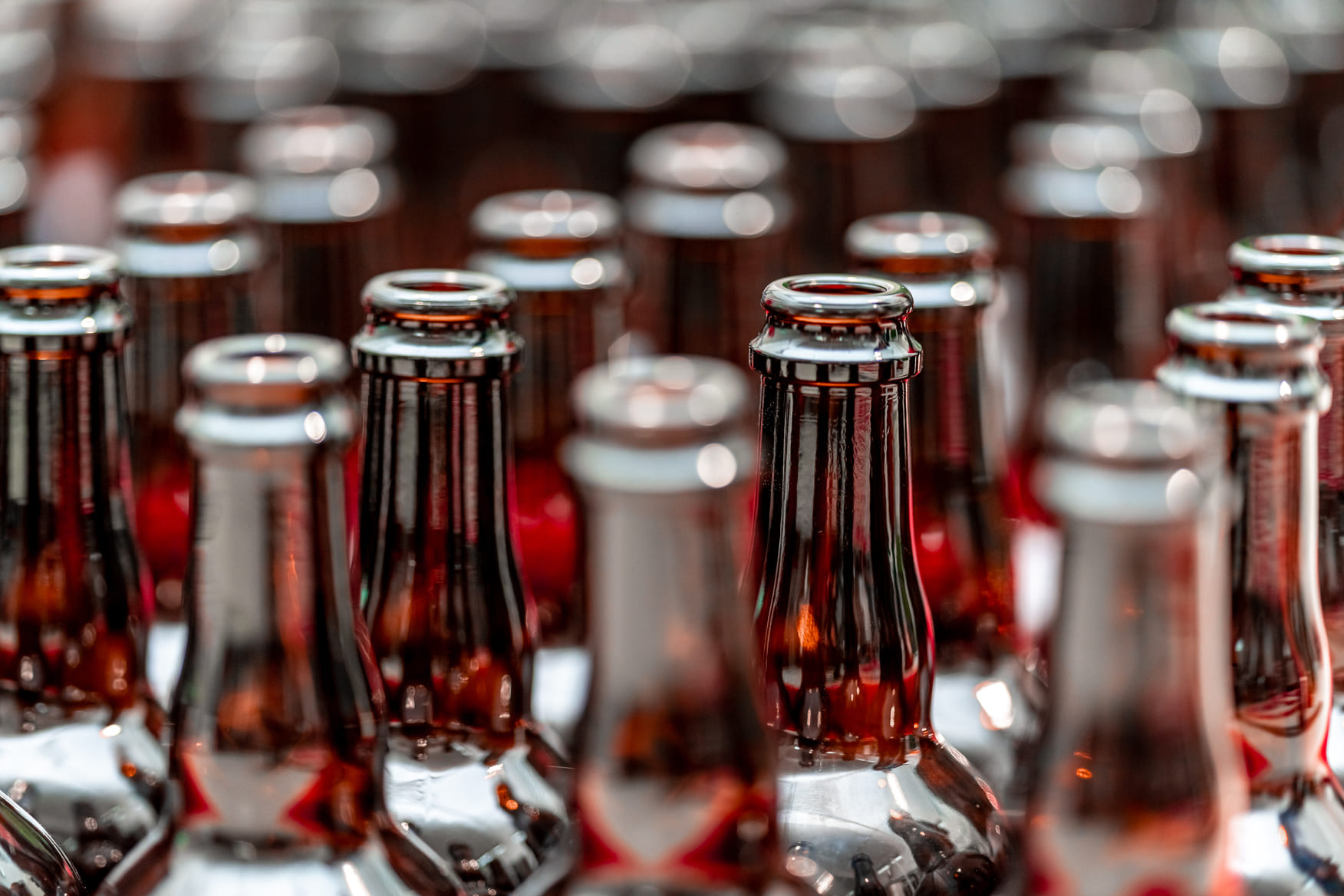
Beer bottles are brown because amber glass blocks the ultraviolet and blue light that tends to spoil hops.
Light reacts with compounds from hops called isohumulones and a vitamin found in beer, riboflavin. This reaction produces a smelly sulfur compound that’s so potent people can detect it at just a few parts per trillion. Brewers call it “skunking,” because the smell is similar to a skunk’s spray.
In 2023, America’s Test Kitchen tested to see how fast the damage happens. They poured the same beer into a clear pint glass, a dark bottle, and then a foil-wrapped bottle, and left all three on a sunny windowsill for 30 minutes. Only the clear glass developed a bad smell.
What happened in this test is explained by a peer-reviewed study conducted a year prior in 2022. According to this study, brown glass blocked up to 83 times more of the damaging light than clear glass, so almost nothing reaches the beer. If you’re sourcing empty beer bottles and aren’t quite sold with brown options, now you have an entire case for it.
Wait, But Why Are Some Beer Bottles Green?
While beer bottles are generally brown because of chemistry, green bottles are explained by history. Specifically, they trace back to a supply problem.
Amber glass ran short in Europe during and after World War II. To cope, breweries switched to whatever green glass was still available. Consumers got used to it, and several brands never switched back.
Green bottles weren’t discontinued. In fact, they still hold a significant share of the market today. But they do have trade-offs. The aforementioned 2022 peer-reviewed study notes that green bottles underperform compared to brown bottles. Browns block roughly 59 times more than greens.
Today, beer bottles can be either green or brown. Why that’s the case is more rooted in branding. Since green offers slightly less protection than brown, it’s far less commonly used, therefore easier to recognize and remember. If paired with tighter control over transit and retail lighting, it’s still a solid option.
Not Sure Which Bottle Color Fits Your Line?
Whether you’re weighing popular bottle colors or keen to explore a custom tint, our team can help you match bottle colors to your product’s shelf life and shelf appeal.
Why Are Wine Bottles Green?
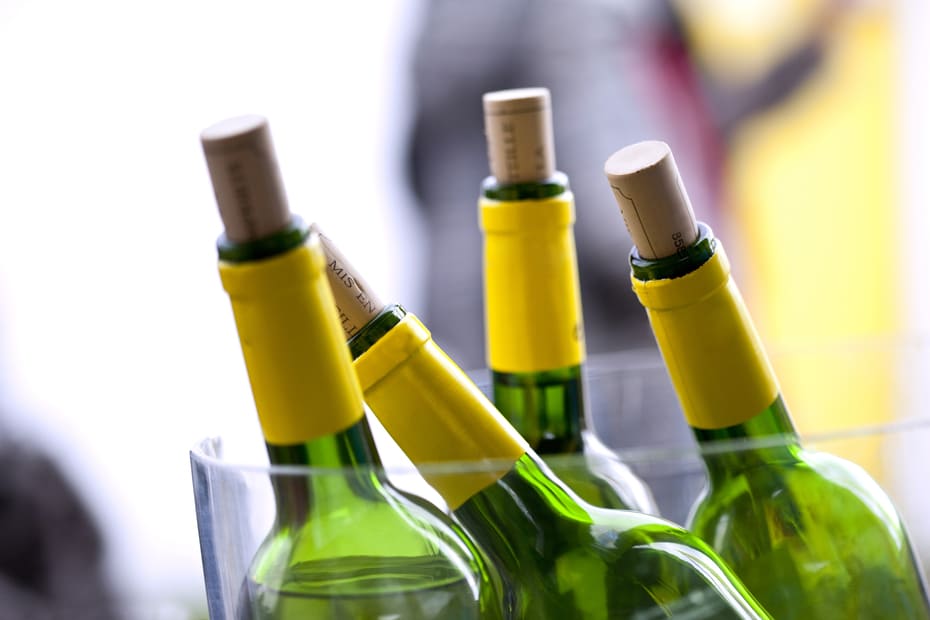
Green wine bottles date back far earlier than green and brown beer bottles, and it can be chalked up to serendipity. Sand used for glassmaking back in the day contained iron impurities that tinted the glass green by default. While it began as a flaw, the color eventually became a signature look, especially for red wine, which benefit from it most.
Red wine contains tannins and other antioxidants from grape skins that help protect it from light and oxidation. These serve as a defense against UV protection that green bottles can’t block entirely.
The same reaction from light that happens in beer also occurs in wine. But the chemistry of red wine, in particular, changes the outcome. As a result, only moderate protection is needed for reds bottled in green glass.
The same can’t be said for whites and rosés. These varieties are more prone to “light-struck” taste, which reportedly smells like cooked cabbage or rotten eggs.
That said, some whites still ship in clear glass for the visual appeal. But that choice often comes at the price of a shorter shelf life and dark, cool storage from bottling onward.
Recap: Matching Glass Bottle Colors to Your Product
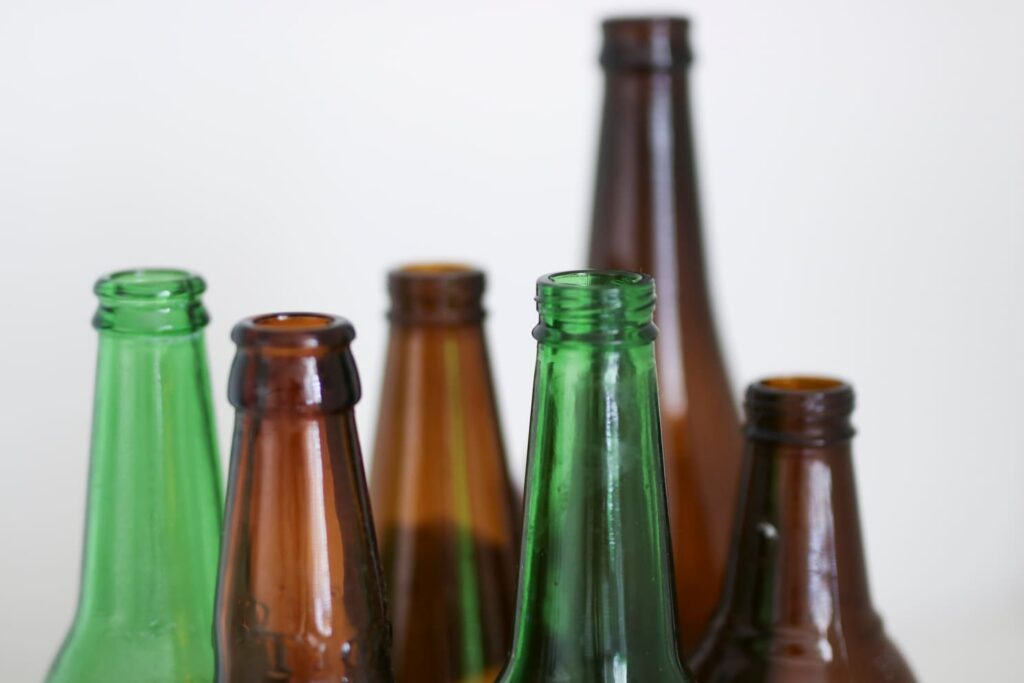
The science behind bottle color seems rather straightforward. The more light-sensitive the product, the darker the glass needs to be.
Beer bottles are brown because of that very reason. They sit at the most vulnerable end of that spectrum. Meanwhile, wine sits in the middle, with red faring much better than white.
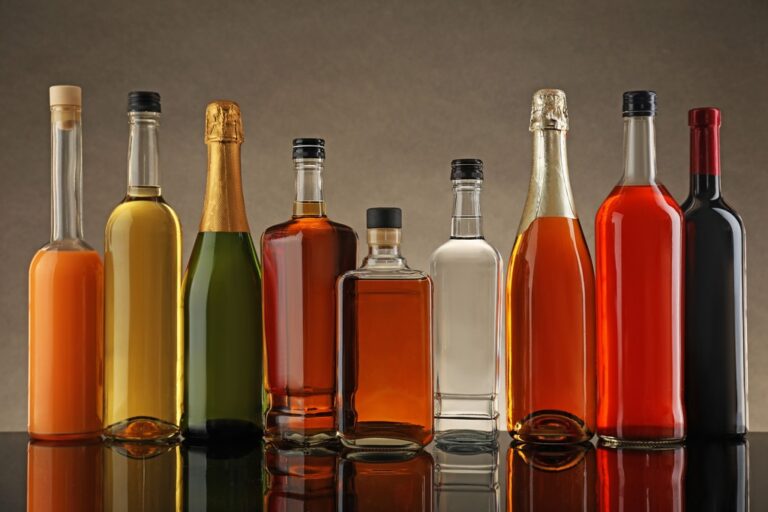
Wondering which drinks sit on the other end? Clear vodka and gin. These spirits carry almost none of the light-sensitive compounds found in beer and white wine, so flint (or clear) glass works fine for most of them.
Aged spirits and liqueurs with natural colorings, however, don’t share the same resilience. These drinks can still develop an off-taste from light exposure.
Here’s how the different drinks compare to one another:
It’s worth remembering that glass bottle colors only protect against light and not much else. It does nothing about oxygen slipping past a loose closure, for instance. When evaluating the right liquor bottle for your product, don’t rely on color alone. You should determine the ideal cap and cork, too.
Choosing the Right Bottle Color for Your Product
Bottle color is about preservation as much as it is about branding. If your product is UV-sensitive, like most beers and wines, remember that beer bottles are brown for a practical, well-established reason.
But if brand recognition matters more to you, and if you have full control over transit and lighting, green or even flint glass can work just as fine.
It all boils down to how much light exposure your product can survive, and how much you’re willing to trade off in exchange for a good branding moment. If you’re still weighing options for your own line, our team can help you land on the right pick. Get in touch with us today.
Ready to Choose the Right Bottle Color?
Find the balance between preservation and shelf appeal. Let our team match bottle colors to what your product and operations require.